
If you've glanced at your child's book bag a few weeks into term and thought "didn't their writing look neater in September?", you're not imagining it, and it almost certainly isn't a sign that something's gone wrong. A few weeks into any school term, handwriting very often gets wobblier, not tidier, and that's usually tiredness and workload catching up with still-developing hand muscles, not regression. There's a difference between handwriting that's genuinely a cause for concern and handwriting that's just having an off patch, and most of what parents notice around now falls firmly into the second camp.
I spent a number of years working in a nursery long before any of this became a business I ran from my spare bedroom, and pencil grip and letter formation were things I watched up close, every day, across dozens of different children. One of the things that surprised me most as a new nursery worker was just how much normal variation there is, and how rarely the thing parents worry about is actually the thing worth worrying about. So this post is about separating the two: what's an ordinary mid-term dip, what genuinely helps without turning it into homework, and what's actually worth flagging to school.
Why this particular point in term is when it shows up
Handwriting demands tend to ramp up steadily once the first few weeks of a new school year have settled, with more copying, more independent writing, and less of the big chunky mark-making that carried children through nursery and reception. At the same time, the muscles in a child's hand, wrist and forearm, the ones that actually do the work of holding a pencil steady for sustained periods, are still building the strength and stamina for that. Those two things crossing over, rising demand meeting a still-developing muscle base, is a big part of why handwriting often looks like it's going backwards right around now rather than at the very start of term, when expectations were still gentle.
Tiredness compounds it. A child's grip and letter control are some of the first things to wobble when they're simply worn out, because fine motor control takes a surprising amount of concentration and muscle control to sustain, and concentration is exactly what's running low by week five or six of term. You'll often see it most clearly in the last piece of writing done at the end of a long school day, compared with the first piece done fresh that morning, same child, same pencil, noticeably different result. That's not a skill that's disappeared. It's a battery that's run low.
There's no single "correct" age for a tidy grip
It's worth saying plainly: pencil grip develops on its own long, variable timeline, and it isn't a single milestone a child either hits or misses. Children typically move through a sequence, starting with a whole-hand, dagger-like grasp as toddlers, through a series of looser, more varied grips as their fine motor control develops, before most settle into a functional grip for handwriting, often described as a tripod grip, somewhere across the early school years. Hand dominance itself (whether a child reliably favours their left or right hand) usually emerges somewhere between about three and five years old, sometimes later, and professional guidance is consistent on this point: it genuinely can't be forced or rushed in either direction.
What that means practically is that two children in the same class, same age, same teacher, same handwriting lessons, can be at genuinely different points in that sequence and both be entirely within normal range. A slightly unconventional grip that still produces legible, pain-free writing isn't automatically a problem that needs correcting. Official guidance on handwriting support is fairly consistent here too: encourage a more typical grip gently, where it helps, but don't force it if a child's own grip is working for them.
What's worth watching for
None of this is to say every bit of messy handwriting is automatically fine and nothing is ever worth a closer look. There's a meaningful difference between "a bit wobbly by home time" and a genuine, ongoing difficulty, and it's worth knowing the difference so you're not either dismissing a real issue or panicking over a normal one.
The things actually worth flagging to a teacher are things like real difficulty holding a pencil at all, writing that's consistently hard to read regardless of how fresh or tired the child is, or a child mentioning pain or discomfort in their hand when they write. If any of those sound familiar, that's a "have a quiet word with the teacher" moment rather than a "panic and request an assessment yourself" moment. Occupational therapy services generally ask that schools try some straightforward strategies first, consistently, over a meaningful stretch of time (commonly framed as several times a week across most of a term), before any referral is even considered, and a referral carries far more weight with that evidence already behind it. So the right first move, almost always, is a conversation with the class teacher, not a direct request for an assessment. They'll usually already have a good sense of whether what you're seeing at home matches what they're seeing in class, which is useful information either way.
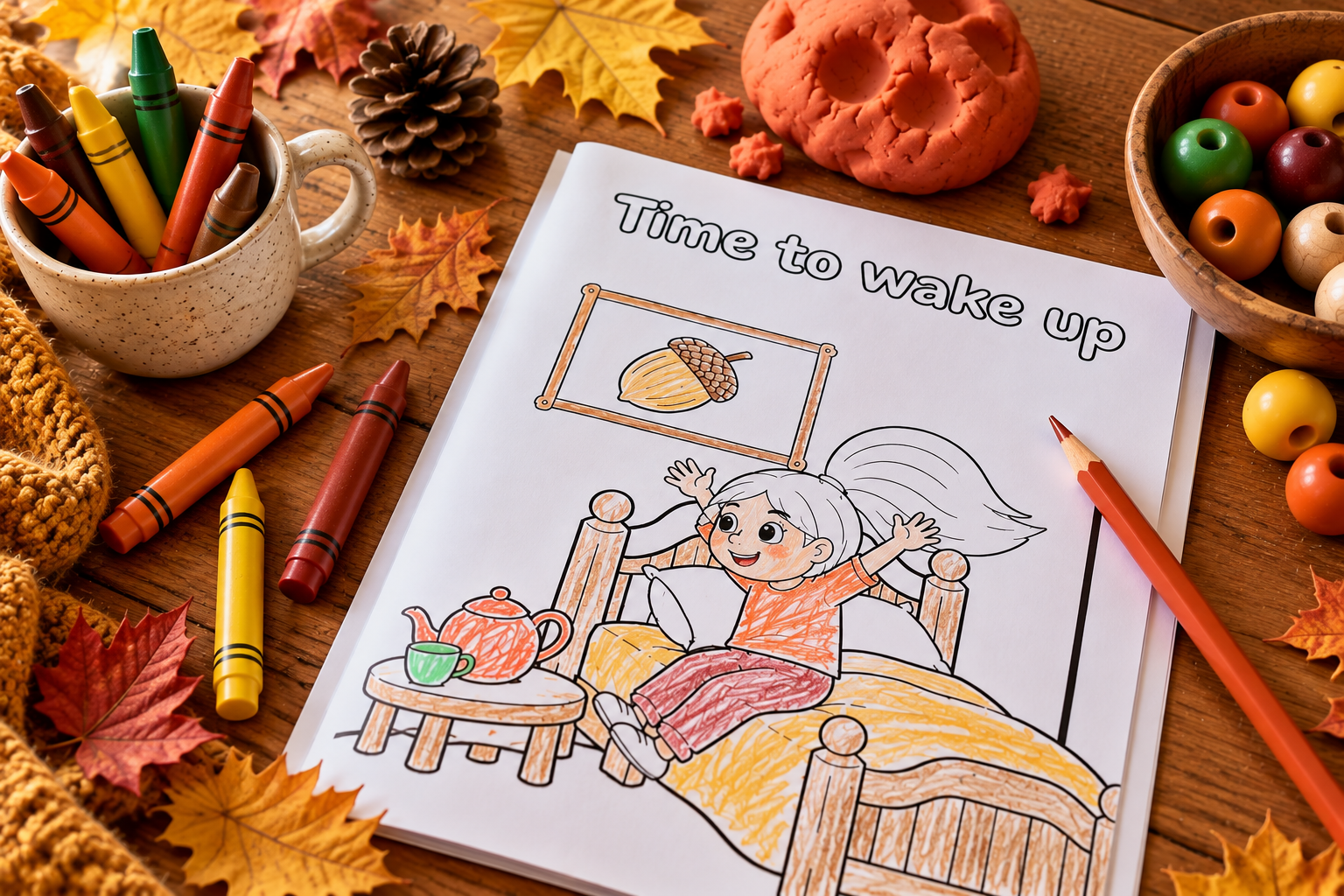
If your child's handwriting looks worse than it did in September, it's probably not a problem, it's tired hands. These are the things that actually help, and none of them feel like homework.
What actually helps, without it becoming homework
The good news is that the things which genuinely build hand strength and pencil control for most children are, almost without exception, things that look like play rather than practice. That matters, because handwriting struggles that get met with correction and pressure tend to create anxiety around writing that outlasts the original fine motor issue by years, something I'd genuinely rather help you avoid than fix later.
For younger children, still in the EYFS(Early Years Foundation Stage) years, the most useful things tend to be the squishiest and messiest: playdough, rolled, pinched, and poked with fingers or sticks, builds exactly the hand strength that pencil control needs later. Threading large beads onto string or a sturdy dowel does something similar for finger precision and two-handed coordination. Painting with a brush held nearer the bristles than the handle, or with a chunky sponge, builds wrist flexibility without feeling remotely like "writing practice." Posting pegs or coins through narrow slots, sorting small objects into an egg carton, or peeling stickers off their backing (which is genuinely harder than it looks, and brilliant for finger isolation) all quietly do the same job.
For children a bit further along, in the early primary years, it's less about building basic hand strength and more about refining control: threading patterned sequences or making simple bracelets, cutting along increasingly fiddly lines rather than just straight ones, simple sewing through pre-punched card, or building with small construction kits that demand real finger dexterity. None of these need to be labelled as "fine motor work" to your child. They're just things to do, and the handwriting benefit is a quiet side effect.
A few things make all of this work better rather than worse: keep sessions short, keep the mood light, and resist the urge to correct every letter in the moment. Early negative feedback about handwriting is one of the more reliable ways to create a child who dreads writing long after their actual pencil control has caught up, so a relaxed "that's a good go" does more long-term good than a running commentary on what's wrong with each letter.
If you want something ready-made for this rather than assembling activities from scratch, a colouring book is honestly one of the easiest, lowest-pressure tools going. The repeated small strokes of colouring in a picture build exactly the sustained grip control that handwriting needs, without it feeling like practice at all. My Woodland Friends Autumn Colour & Learn Book was built with this age and season in mind, so it's one I'd genuinely reach for on a cosy afternoon when I wanted a child quietly building that control without either of us thinking of it as "working on handwriting."
Cold hands don't help either
There's a seasonal piece to this too, and it's worth naming because it's one more reason to go easy on yourself and your child right now rather than assuming the worst. Cold genuinely affects fine motor dexterity. Hands that have just come in from a chilly playground, or that have spent the first part of the morning in a classroom before the heating's properly kicked in, simply don't move as precisely as warm ones do. Reduced blood flow to the fingers makes small, controlled movements harder work, which is exactly what sustained pencil control needs. So if you notice handwriting is especially shaky first thing on a cold morning, or straight after outdoor break on a nippy day, that's very likely exactly what's going on, rather than anything to do with skill.
It's a small thing, but a minute or two of rubbing hands together, or holding a warm mug before settling down to write, can genuinely help a child's hands "wake up" before anything that needs careful control. It's the same principle as anyone finding it harder to thread a needle or do up small buttons with cold fingers, children's hands just aren't exempt from it, and theirs are still building the strength to compensate for it.
A quick word on posture and the practical bits
It's easy to focus entirely on the hand and forget that handwriting is really a whole-body task. A child sitting on a chair that's too high, with feet dangling and nothing to push against, or hunched over a table that's the wrong height, will tire far faster and write far less steadily than one sitting with feet flat and a supported, stable base. If you're ever troubleshooting a child who seems to tire unusually quickly when writing, it's worth glancing at the chair and table height before anything else. It's one of the simplest things to fix and one of the most commonly overlooked.
It's a different problem from writing anxiety, and that's worth knowing too
It's worth drawing a clear line between what this post is about and a different, related struggle some families hit a bit later: a child who can physically form letters perfectly well but freezes when faced with deciding what to write. That's a confidence and ideas problem, not a hands-and-muscles one, and it needs a different kind of support (gentle prompts and low-stakes starting points, rather than hand-strengthening activities). If your child's actual letter formation is fine but they stall completely the moment they have to come up with their own sentence, that's the other half of this picture, worth keeping in mind as a separate issue rather than lumping it in with grip and fatigue. The two can certainly show up together in the same tired, overwhelmed child, but treating a confidence wobble with fine motor activities, or a genuinely tired hand with pep talks about ideas, tends to miss the actual problem either way.
Frequently asked questions
Should I correct my child every time their pencil grip looks "wrong"?
Generally, no. Gentle encouragement toward a more typical grip is reasonable, but if your child's grip is producing legible, pain-free writing, it's usually best left alone. Grip genuinely develops on its own variable timeline, and constant correction tends to create frustration without speeding anything up.
What age should my child be able to write neatly?
There isn't one fixed age, because children move through the stages of pencil grip and letter control at noticeably different rates, even within the same class. A gradual improvement across the early primary years, rather than a specific age target, is the realistic picture to hold in mind.
Is it normal for handwriting to be worse at the end of the school day than first thing in the morning?
Yes, very much so. Fine motor control draws heavily on concentration and muscle stamina, both of which are naturally lower by the end of a long school day. A big gap between morning and afternoon handwriting is usually tiredness, not a skill that's gone missing.
Should I be doing fine motor activities with my child every single day?
Little and often beats long, infrequent sessions, but it doesn't need to be daily to help, and it definitely shouldn't feel like a chore for either of you. A few short, playful sessions a week, woven into normal play, tends to do the job without anyone dreading it.
When should I actually ask the school about a referral?
After you've raised it with the class teacher and tried some straightforward strategies consistently for a reasonable stretch, commonly framed as several weeks across most of a term, with little or no improvement. Schools and occupational therapy services generally want that evidence of strategies already tried before a referral is considered, so starting with a conversation with the teacher is the right first step, not a detour.
Before you go
If you've been quietly worrying about a wobbly page of handwriting that came home this week, I hope this has taken some of the weight off. Most of what you're seeing right now is a tired hand catching up with rising demands, not a problem that needs fixing urgently, and the things that actually help are the playful, unglamorous ones: dough, beads, scissors, a colouring page on a quiet afternoon. Keep it light, keep an eye on the things that are genuinely worth a word with the teacher, and give the rest of it time. Hands, like everything else about growing up, get there in their own order.
