
The Sick Day Survival Guide: What Actually Helps When Your Child Is Home From School
A former nanny's honest, no-guilt guide to getting through a poorly day at home, from the first sniffle to the "bored but not quite right yet" stage.
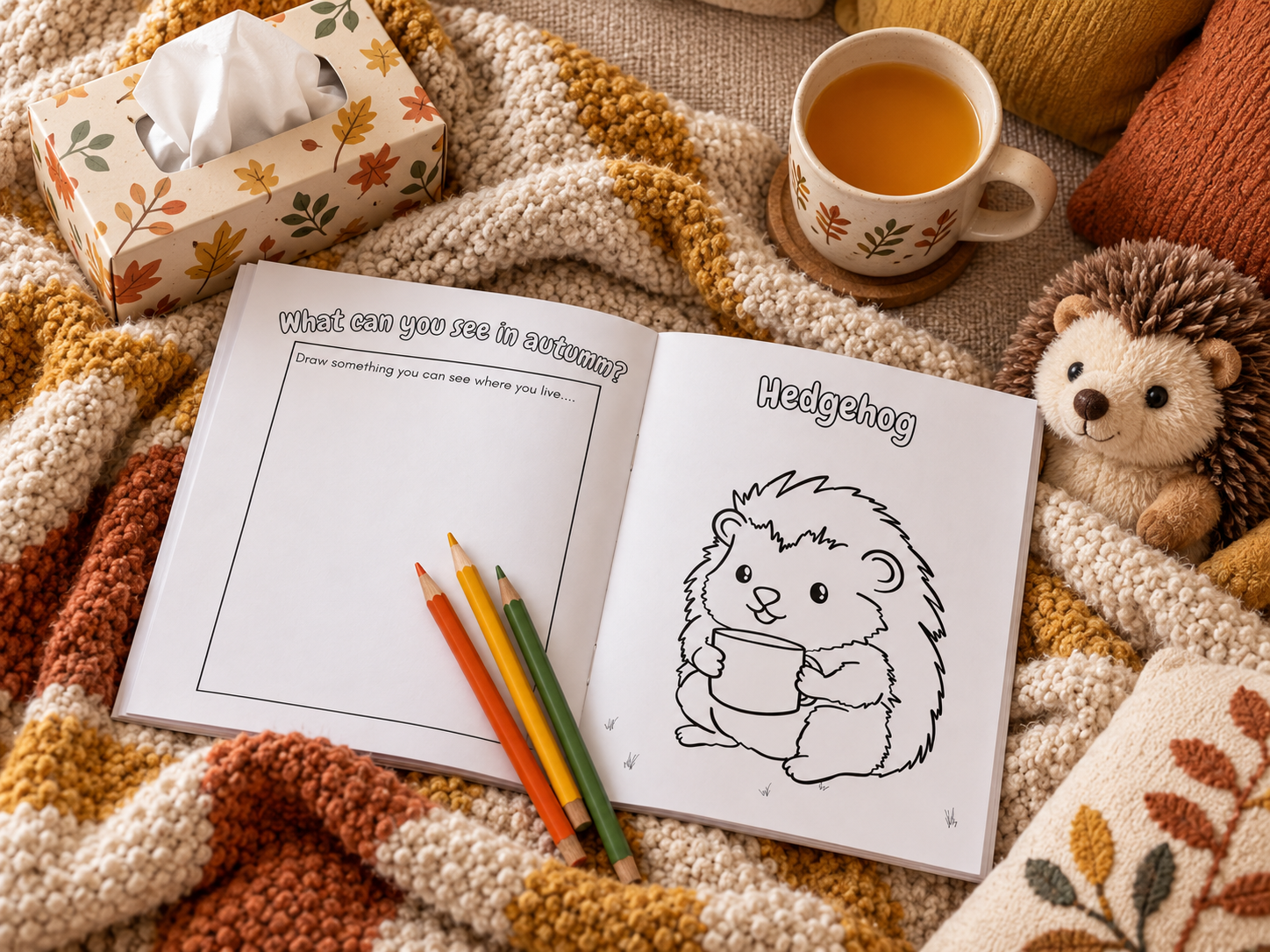
There's a very particular kind of tired that comes with the words "I don't feel well" at 7am on a school morning. You know the one. The thermometer comes out, the school run gets cancelled in your head before you've even checked, and suddenly your whole day rearranges itself around a small person on the sofa who doesn't quite know what to do with themselves either.
If this has been you in the last week or two, you're not alone, and you're not doing anything wrong. This is the point in the school year when it happens to almost everyone, right on schedule. So here's the direct answer, if you're standing in your kitchen right now wondering how you're going to fill the hours: you don't need to fill them. A sick day at home doesn't need entertaining from breakfast to bedtime. It needs low structure, low pressure, and permission for both of you to do less than usual.
I spent a number of years working as a nanny and in nursery settings before I started making printables for a living, and if there's one thing that time taught me, it's that children recover better, and days go smoother, when the adult in the room stops trying to manage the day and starts simply getting through it gently. That's what this post is about.
Key Takeaways
- The first cold of the school year isn't a sign anything has gone wrong. Children in school or nursery settings typically pick up 8 to 12 colds a year, more than double the average adult, because their immune systems are still building up exposure to everything going round.
- Current UK health guidance is clear that a mild cough or cold without a fever doesn't need to keep a child off school, but a fever, or an upset stomach, does, with specific guidelines for when it's safe to go back.
- You don't need a packed activity schedule for a sick day. A small, predictable rotation of low-effort, low-mess options works better than novelty.
- The hardest part of a sick day is usually the recovering stage, not the worst-of-it stage, because that's when boredom and low energy collide and neither of you knows quite what to do with it.
- Lowering your own expectations for the day, screen time included, is not a failure of parenting. It's one of the most useful things you can do for both of you.
Why this always seems to happen right now
If it feels like the coughs and colds have arrived all at once this year, that's not your imagination. After the summer holidays, children go back into classrooms and nurseries full-time, in close contact with dozens of other children who've all spent six weeks building up their own collection of bugs elsewhere. Everything mixes together again, and by three or four weeks into the new term, it's doing the rounds properly. This is such a well recognised pattern that health bodies now put out seasonal guidance for it every year, because school attendance dips and GP appointments spike at almost exactly this point on the calendar, every single time.
Layer onto that the shift in weather. The evenings are drawing in, everyone's spending more time indoors and in closer quarters, and the fresh air and space that helped burn off germs (and energy) over summer is harder to come by. It's a perfect storm, and it happens to every family, every year, whether their child is in nursery, reception, or secondary school.
Knowing that doesn't make the day off any less disruptive. But it does mean you can stop asking "why does this keep happening" and start asking the more useful question: "what actually helps, once it has?"
The bit nobody tells you about sick days
Here's the truth that took me a while to learn, both as a nanny and later as a parent myself, looking back on years of school runs and sniffles: the first day of being unwell is rarely the hard one. When a child is properly poorly, running a temperature, wiped out, wanting nothing more than to lie under a blanket and be near you, the day mostly runs itself. You're not entertaining anyone. You're just being present, topping up fluids, and letting them sleep.
The hard day is the one after that. The fever's gone, the worst of it has passed, but they're still not quite right, still not well enough for school, and suddenly they have opinions again. They're bored. They want to run around, or they want twelve different things in the space of an hour, and you're trying to hold down a job, a business, or the rest of the household, around a child who is neither poorly enough to rest nor well enough to properly play.
That's the day this guide is really for. And it's also, usually, the day parents feel most guilty about, because it doesn't look like "proper" illness from the outside, and it can feel like you're somehow failing to manage it well. You're not. This stage is just genuinely awkward to fill, for everyone, and it deserves its own strategy rather than leftover ideas from a well day.
What the guidance actually says (so you're not guessing)
It helps to know the actual rules of thumb here, because a lot of the guilt around sick days comes from uncertainty about whether you're being overly cautious or not cautious enough.
Current UK health guidance is fairly reassuring: a child with a minor cough or cold, and no fever, doesn't need to be kept off school. It's specifically fever, and gastric bugs, that come with firmer rules. If your child has a temperature, the guidance is to keep them home until it's gone. For diarrhoea or vomiting, it's at least 48 hours clear of the last episode before they go back, to avoid passing it round the whole class. For something like scarlet fever, it's 24 hours after starting antibiotics. None of this needs to live in your head permanently, but it's worth knowing so you can make the call with a bit more confidence and a bit less second-guessing.
It's also worth remembering that this isn't a reflection of anything you're doing wrong at home. Health guidance bodies are explicit that young children in group settings simply catch more of these bugs, because their immune systems haven't built up exposure yet, and because nurseries and classrooms are, by their very nature, excellent places for viruses to travel. A child who seems to catch "everything going round" isn't unusually delicate. They're doing exactly what every child their age does.
The turn: lower the bar, on purpose
Once you know that, something shifts. A sick day stops being a problem to solve and becomes a day to simply get through with as much warmth and as little friction as possible. That means actively lowering the bar, not apologetically, but on purpose.
That might mean more screen time than usual. It might mean beans on toast for the third meal running, or the same colouring book coming out for the fourth day in a row because it's familiar and comforting and nobody has the energy to negotiate over something new. None of that undoes your good parenting the rest of the time. A sick day runs on different rules, and the sooner you agree to that with yourself, the calmer the day tends to go.
What tends to help most isn't a clever new activity. It's having a small, ready rotation of calm, low-effort options you can reach for without having to think, because thinking is in short supply on a day like this.
A simple rhythm for getting through it
Rather than a single list of "things to do," it helps to think in stages, because what works shifts as your child moves from properly poorly to bored-but-recovering.
Stage one: properly under the weather. This stage barely needs planning. A nest of blankets, water or squash within reach, and something to listen to or watch that doesn't require much from either of you. An audiobook or a favourite story read aloud works beautifully here, because it asks nothing of a tired body while still giving their mind something gentle to hold onto.
Stage two: perking up, still on the sofa. This is where a quiet activity book earns its keep. Something with no time pressure, no correct answers to check, and pages that can be picked up and put down without losing the thread. This is exactly the gap I designed the Woodland Friends Autumn Colour & Learn Book to sit in: a mix of colouring and gentle nature-based activities with an answer guide for the grown-up, so there's nothing to mark and nothing to get "wrong." It's the kind of thing that can live on the sofa arm for a few days running without anyone getting bored of it, which is exactly what you want when you don't know how many days you're planning for yet.
Stage three: the "I feel fine now, why can't I go to school" stage. This is the tricky one, because energy is back but they're not yet cleared to return. Simple, low-mess tasks with a small sense of achievement help here: a short activity page they can finish in one sitting, building something small out of what's in a craft drawer, or a "job" like sorting a box of something, which sounds unglamorous but genuinely absorbs restless energy. This is also the stage where an extra bit of screen time, guilt-free, buys you both some breathing room. You're not creating a habit. You're getting through a Tuesday.
Keep a small "sick day basket" ready, if you can. Having two or three go-to items already gathered somewhere, rather than hunting for them while also managing a poorly child, removes a surprising amount of stress from the day. A couple of activity books kept aside specifically for this, a few felt tips that live only in that basket, and something to listen to. Nothing fancy. The value is entirely in not having to think about it when you're already running on empty.
Don't aim for productive. It's tempting, when a child is quiet and occupied, to try to get "proper" things done, whether that's work, a business task, or the pile of washing that's been growing since Monday. Do a little if you genuinely need to, but hold your expectations of yourself as loosely as you're holding your expectations of the day. A sick day that ends with everyone a bit calmer and a bit more rested has done its job, whatever the to-do list says.
Frequently Asked Questions
How do I know if my child is actually well enough to go back to school? The general rule is no fever for 24 hours without medication, and no vomiting or diarrhoea for 48 hours since the last episode. A lingering cough or runny nose on its own usually isn't a reason to keep them home, as long as they're eating, drinking, and generally themselves again.
Is it normal for my child to catch something every few weeks right now? Yes, especially in the first term back after a summer break, and especially for children newer to nursery or school. It usually settles as the year goes on and their immune system builds up exposure. It's frustrating, but it isn't a sign of anything being wrong.
What if they seem fine in themselves but still have a cough? A cough that's improving and not accompanied by fever, wheeze, or laboured breathing generally isn't a reason to keep a child off school under current guidance. Trust how they're behaving as much as the symptom itself: energy, appetite, and mood tell you a lot.
How do I manage a sick day when I also need to work? Be honest with yourself about which stage of illness you're in. On a properly poorly day, most children will nap or rest for stretches, which can buy you short windows of focused time. On the bored-but-recovering day, a ready rotation of quiet, low-supervision activities matters more than trying to work around them constantly. Some days, the work simply moves, and that's okay.
Is it bad to let screen time slide during a run of sick days? No. A few days of extra screen time during genuine illness isn't going to undo anything. What tends to help more than restricting it is having a couple of non-screen options genuinely ready to go, so screens aren't the only thing on offer by default, purely out of tiredness on your part.
Before you go
If you're in the thick of a sick day right now, or bracing for the next one, here's what I'd want you to take from this: this stretch of the school year is hard for a reason that has nothing to do with how well you're managing it. Every family with a child in school or nursery is somewhere on this same rota of colds and recovery days, whether or not you can see it from the outside.
You don't need a Pinterest-worthy activity plan. You need a blanket, something calm within reach, and permission to let the day be smaller than usual. That's enough. It's always been enough.
Take care of the small person on your sofa, and take a little care of yourself too while you're at it.
Lucy x
